
How to Attract More Customers with Targeted Advertising: A Practical Guide
Learn practical ways to use targeted advertising to attract customers effectively, with actionable tips and tools.


SMM strategist, content marketer
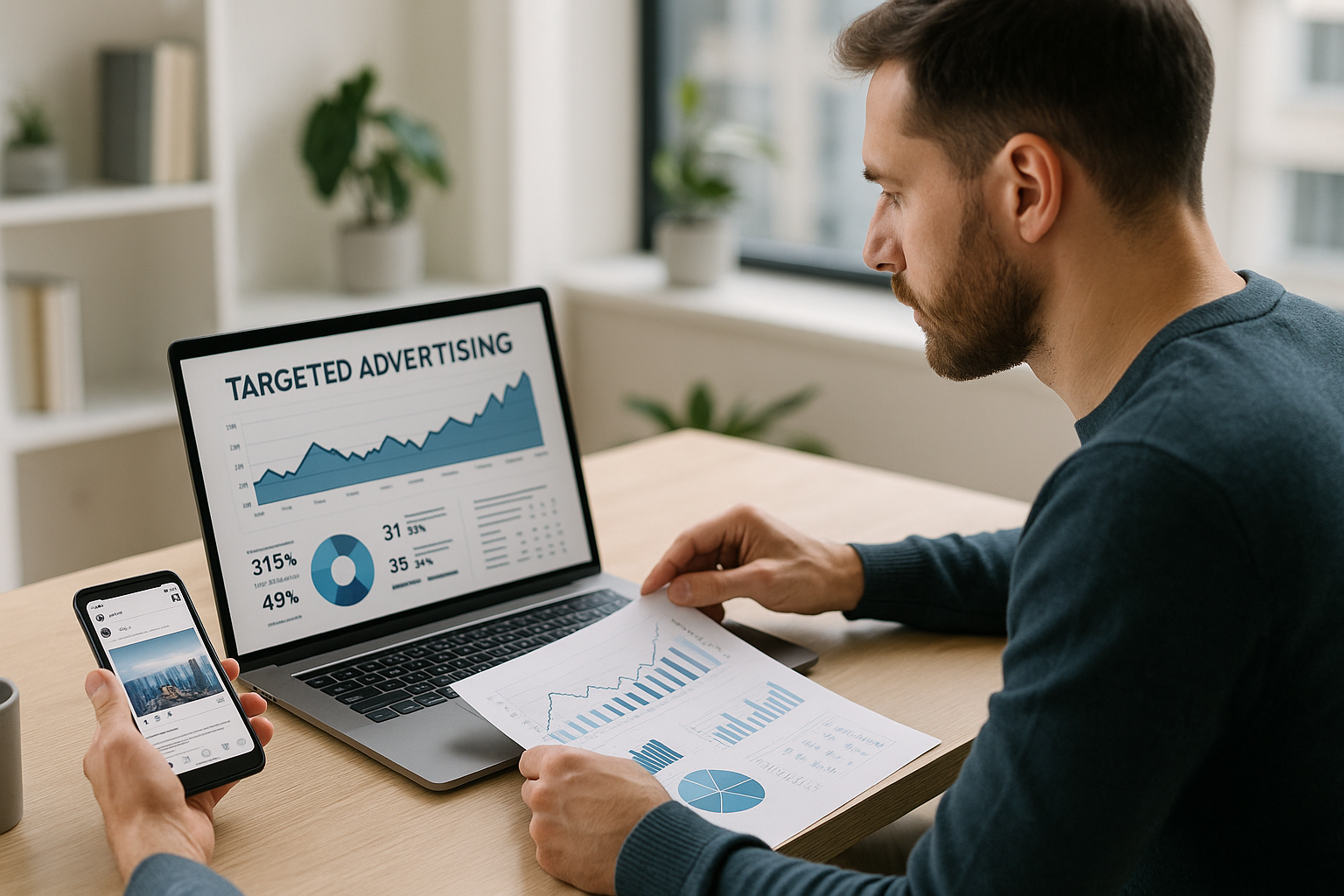
Targeted advertising is a powerful tool for acquiring new customers in digital marketing. Defining the right audience, choosing optimal platforms, and crafting engaging ads are key to boosting conversions. Utilizing platforms like Facebook Ads, Google Ads, and Instagram allows advertisers to tailor campaigns precisely to business goals. This article provides practical steps for budget optimization, setting up retargeting, and analyzing campaign results. Following these tactics will help turn targeted ads into a reliable source of customers and improve overall marketing efficiency.
Contents
- Identifying Your Target Audience for Effective Ads
- Choosing the Best Advertising Platforms to Attract Clients
- Crafting Engaging Ad Creatives with Clear Calls to Action
- Budget Optimization Strategies for Targeted Advertising
- Using A/B Testing to Improve Ad Performance
- Setting Up Retargeting Campaigns to Re-engage Visitors
- Analyzing Campaign Metrics for Continuous Improvement
- Integrating CRM Systems to Automate Lead Management
- Scaling Your Advertising Campaigns Responsibly
- Conclusion
Identifying Your Target Audience for Effective Ads
The first step in targeted advertising is to clearly identify your target audience. Without this, efforts often become a shot in the dark. A common rookie mistake is overly broad or vague segmentation, which dilutes budget and reduces conversion rates. How to fix it? Start by analyzing your customers: segment them by age, geography, interests, and online behavior. For example, a sporting goods store successfully attracted clients by splitting their audience into beginners and professionals, offering different ad messages. Another case , a coffee shop targeted office workers within 5 km with morning coffee discounts, increasing foot traffic by 30%. The core mechanism is that a highly relevant message to a specific segment boosts engagement and click-through, optimizing spend and improving ROI. Practical steps: 1) Gather customer data or use Facebook Audience Insights 2) Identify 3–5 key segments 3) Create detailed profiles of each segment 4) Predict how each will respond to your ads. This approach lays a solid foundation for choosing ad platforms and crafting creatives tailored to real needs.
Choosing the Best Advertising Platforms to Attract Clients
Choosing the right advertising platform is often a hurdle in effectively attracting clients. Analytics show that not every platform fits every business, so assessing your audience and goals is crucial. For example, Facebook Ads and Instagram work best for B2C with visual content, while Google Ads suits search queries and B2B better. The solution is to test platforms with small budgets and analyze conversions. One case: a small clothing store launched ads on Instagram, gaining a 30% sales increase in a month by targeting 18–25-year-olds. Another example: an IT company focused on business solutions increased leads by 40% through Google search ads. Beginners often make the mistake of launching all platforms at once without a clear plan, which dilutes the budget. Why does it work? Each platform has unique targeting mechanics and user behavior patterns. Practical step: identify your audience, test two platforms with minimal bids, compare results, then scale. I recommend Ads Manager for Facebook/Instagram and Google Ads Editor for quick campaign edits. This way, you pick the platform that delivers real profit, not just traffic.
Crafting Engaging Ad Creatives with Clear Calls to Action
Problem: even precise targeting is wasted if the ad itself fails to grab attention. To engage potential clients, the ad must have a clear message and a compelling call to action. Analyzing common mistakes, beginners often create vague or overly generic texts that don’t motivate clicks. The solution is a simple structure: 1) a short headline that immediately states the benefit, 2) a description of the problem or desired outcome, 3) a clear call to action. Example 1: a sportswear online store changed the headline from “Shop with us” to “Experience comfort during workouts” and added a button “Browse collection,” increasing CTR by 35%. Example 2: an English school replaced “Sign up for courses” with “Speak fluently in 3 months” plus a “Start a free lesson” button, boosting conversion by 20%. This works because people quickly assess what they get and want specifics. Practical steps: 1) identify your product’s key benefit, 2) phrase it simply, 3) add a call that urges immediate action. For design, I recommend Canva , it’s quick and user-friendly. Never skip testing ad variations to avoid the common risk of having cool-looking ads that don’t perform. Overall, client-focused creativity is what truly improves ad effectiveness. And remember: short and to the point always wins.
Budget Optimization Strategies for Targeted Advertising
Lack of a clear budget plan is a common rookie mistake in targeted advertising. Often funds are spent chaotically, leading to rapid depletion without meaningful results. To maximize your spend, regularly analyze campaign performance and flexibly allocate budget to the most productive audience segments. For example, a smartphone accessory business adjusted its budget by increasing spend on Facebook users aged 18–30, leading to a 35% conversion increase with the same total budget.
Another case is a local restaurant launching Instagram ads with a limited budget. They prioritized geotargeting and interests like “vegan cuisine.” As a result, bookings grew by 20% without extra spending. This works because targeting highlights the most relevant groups, and budget control directs resources where ROI is highest.
Practical steps: 1) Identify high-converting key audiences. 2) Allocate budget by audience priority. 3) Monitor results via ad platforms. 4) Adjust bids or pause ineffective segments timely. Consider tools like Facebook Ads Manager or Google Ads to track spend and effectiveness at campaign and ad levels.
So, if you want more clients from the same amount, treat your budget as an investment, not just an expense. This systematic approach enables scaling results without unnecessary losses.
Using A/B Testing to Improve Ad Performance
A/B testing reveals which ad elements perform better and which underperform. The problem is, without tests, you risk wasting budget on ineffective creatives or headlines. The core principle is to run two versions of an ad simultaneously and compare their conversion results. For example, in Facebook Ads, you might test different CTAs ('Learn More' vs 'Get Discount') to see which drives more clicks. Another scenario is testing images: one with a product photo, another with happy people using it. The data might show that emotional imagery increases conversions by 15%. This works because testing provides real data instead of assumptions.
Beginners often mistakenly run too many variants at once, diluting data and complicating analysis. I recommend limiting tests to 2-3 variables and running them sequentially. Practical steps: 1) choose the ad element to test, 2) create two versions, 3) run the test on similar audiences, 4) collect data for at least 3-5 days, 5) analyze results and pick the better option. Tools like Facebook Ads Manager or Google Optimize help streamline tests. Remember, A/B testing isn’t a one-time task but an ongoing optimization process to boost ad performance.
Setting Up Retargeting Campaigns to Re-engage Visitors
Retargeting is a tool that helps bring back users who showed interest but haven't converted yet. A common issue for beginners in targeted advertising is running broad campaigns without re-engaging their audience, which leads to lost potential clients. The logic of retargeting is straightforward: you show ads to people already familiar with your product, so they are more likely to buy. Here’s a step-by-step setup: 1) Install Facebook or Google pixel on your website to track visitors and their behavior, 2) Create retargeting audiences (visitors of specific pages, cart abandoners), 3) Launch campaigns with personalized messages like product reminders or special offers. For example, a clothing online store recovered 25% of users who abandoned their carts by running ads with a 10% discount. Another case , an educational platform used retargeting to show free webinars to those who viewed course pages, boosting conversions by 18%. Avoid overexposing your ads to prevent annoying your audience , a typical beginner mistake. Use Facebook Ads Manager or Google Ads for precise targeting and analysis. Retargeting works because it moves users from interest to purchase by considering their behavior. Next, analyze performance to identify which segments bring the most clients.
Analyzing Campaign Metrics for Continuous Improvement
Evaluating the effectiveness of targeted advertising isn’t just about looking at numbers, it’s a systematic approach to understanding why a campaign succeeds or fails. A common rookie mistake is focusing solely on click metrics while ignoring vital ones like conversions or customer acquisition cost. For a thorough analysis, focus on: 1) CTR – indicates ad engagement, 2) CPA – cost per acquisition, 3) ROAS – return on ad spend, 4) Time spent on site post-click.
For instance, in one e-commerce client case, a high CTR but low ROAS revealed users clicked but didn’t buy due to a complicated checkout process. Simplifying the form cut lead cost by 30%. Another case involved Facebook ads for a local service , regularly tracking CPA enabled timely budget shifts to more effective audiences, boosting conversions by 25%. I recommend using Google Analytics alongside Facebook Ads Manager for analytics – a proven combo. The logic is straightforward: metric analysis uncovers weaknesses, allowing quick strategy tweaks and improved results. To replicate: set up conversion tracking, define key KPIs, review data daily or weekly, and adjust campaigns promptly.
Integrating CRM Systems to Automate Lead Management
Without integrating a CRM system with targeted advertising, a common issue arises,slow processing of client requests, causing potential customers to lose interest. Analysis shows that manual transferring of contacts and lack of automation leads to delays and communication errors. The solution is straightforward: connect advertising platforms to a CRM so all generated leads are automatically recorded and instantly assigned to managers. For example, an online clothing retailer linked Facebook Ads to Bitrix24 CRM. Incoming leads were automatically created in the system, enabling managers to contact clients within an hour instead of 24, boosting conversions by 15%. Another case: a tech repair service integrated Google Ads with HubSpot, allowing lead source tracking and setting personalized triggers for handling inquiries. A typical rookie mistake is setting up automation without testing,this often leads to chaos in the database. Why does it work? Automation eliminates human error, speeds up response times, and prevents losing potential clients early on. Practical steps: 1) choose a CRM with integration capabilities (e.g., Bitrix24, HubSpot), 2) connect it to ad platforms via API or integration builder, 3) test data transfer, 4) set lead distribution rules and automatic notifications for managers. This approach makes client processing fast, error-free, and transparent, directly improving ad campaign performance.
Scaling Your Advertising Campaigns Responsibly
Scaling advertising campaigns is a challenge often accompanied by the risk of losing budget control and decreasing efficiency. The problem is that without a clear strategy, increasing reach can simply burn money. To avoid this, it’s essential to consistently analyze A/B test results (see point 5) and gradually increase the budget instead of making sudden large changes. For example, an e-commerce business started testing ads with a 1000 UAH budget and gradually increased spending by 10-15% weekly, while optimizing creatives and audiences. This resulted in a 30% increase in conversions within a month without significant losses. Another case: a local service scaled retargeting campaigns (point 6) by adding new audience segments and integrating CRM for lead management automation (point 8), speeding up response times and maintaining conversions during reach growth. A common beginner’s mistake is sharply raising the budget without analysis and adjustment, leading to a rapid increase in CPA. Why does this work? A gradual approach allows ad platforms’ algorithms to adapt to new conditions and maintain traffic quality. Practical steps: 1) set a maximum test budget for growth, 2) monitor key metrics (CPA, CTR) before scaling, 3) add new audiences or creatives in stages. Use Google Analytics and Facebook Ads Manager for accurate results evaluation. In summary, scaling ads wisely can avoid unnecessary risks if discipline is maintained and quick changes are avoided.
Conclusion
To make targeted advertising a stable source of clients, the main challenge is maintaining systematized campaigns, otherwise, costs rise and efficiency drops quickly. Analysis shows success hinges on combining precise audience segmentation, thorough ad testing, and continuous performance monitoring. For example, a clothing online store increased conversions by 30% in two months by implementing A/B testing of creatives and setting up retargeting campaigns. Meanwhile, a food delivery service integrated CRM with ads, reducing lead loss by 20% due to faster order processing. A common rookie mistake is scaling too fast without data analysis, which wastes budget.
This works because a systematic approach allows quick adaptation to audience behavior changes and optimizes spending. Practical steps: 1) define audience segments, 2) run A/B tests, 3) implement retargeting, 4) connect CRM for automation, 5) regularly analyze metrics. I recommend Facebook Ads Manager for precise targeting and Google Analytics to evaluate campaign effectiveness. This way, you don’t just attract clients but build a robust system delivering consistent results without unnecessary risks.
Helps brands build social media communication that creates trust and brings results.
Comments (0)
Leave Your FeedbackNo comments yet — be the first to share your thoughts.